
On Purpose — Daniel Yonas
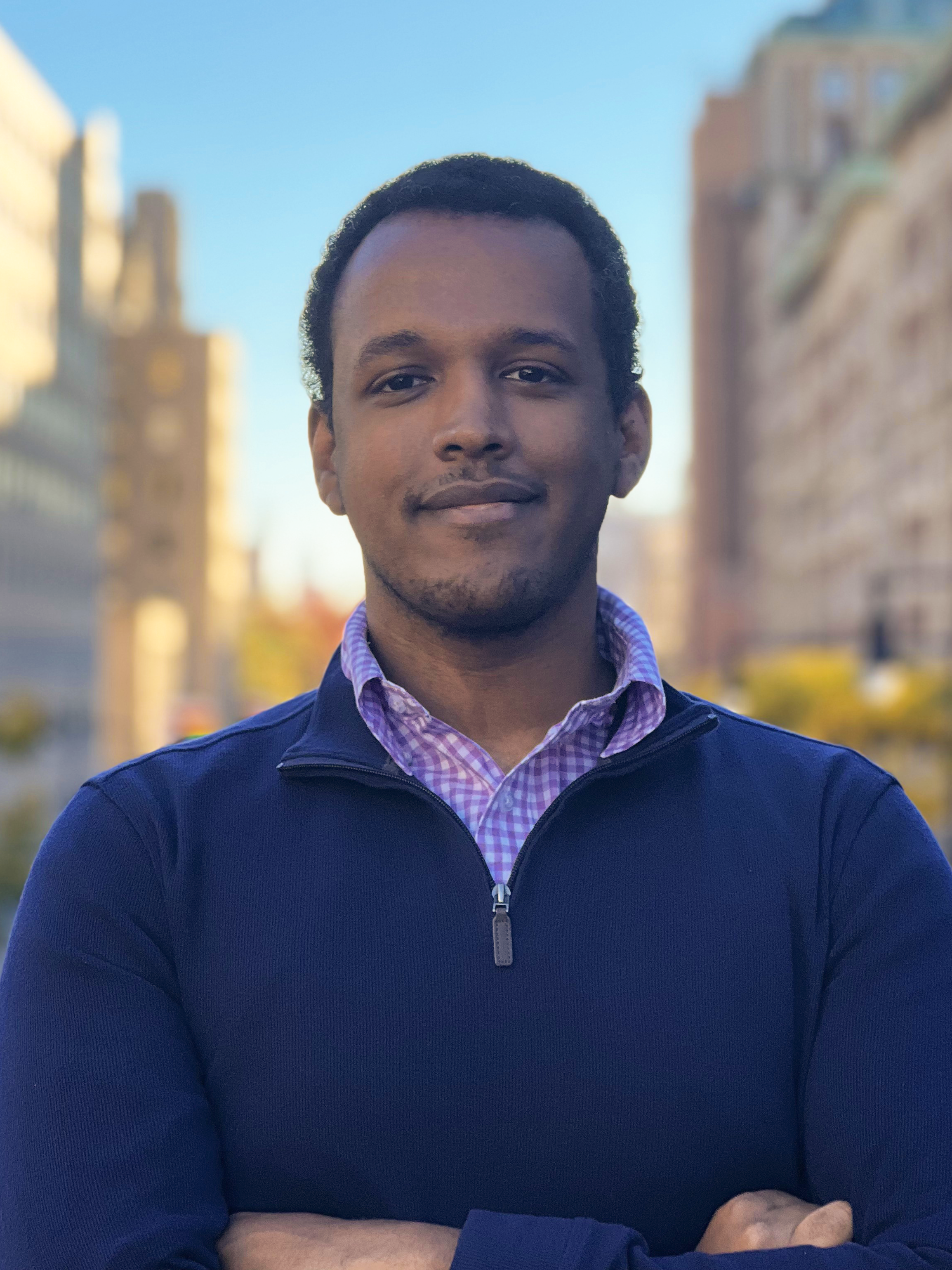
Today we feature Daniel Yonas, a postdoctoral researcher with PSiX, where he contributes to the National Purpose Survey on Youth and other emerging research initiatives.
Yonas studied cognitive science at the University of Virginia before earning an M.Ed. in educational psychology and a Ph.D. in psychology from Columbia University. His research focus is on moral psychology and intergroup relations, examining how children and adults reason about harm, intent, and morally charged situations. His work also centers historically marginalized communities in both research design and participation. His background helps inform the development and rollout of the National Purpose Survey on Youth.
We talked with Yonas about purpose — why he was drawn to study it, what it is, what it isn't, and what we should understand about it.
Q: How would you define purpose? What does it mean for a person’s life to have purpose?
Yonas: It's interesting because if you had asked me before I started working here, I would have said that purpose is very similar to meaning. Your purpose in life is the thing that you would define your life against — the thing that you believe you're put on this earth to explore and to accomplish. I think that's generally a fairly broad, impactful idea and concept; this is why lots of people talk about it, lots of people think about it and why it's something you see reflected across everything — from media, to everyday interactions with people, to religion.
Working in purpose research and reading the literature, I've been able to disambiguate purpose from meaning — there are lots of things in life that have meaning but don't have to be your purpose. I would say purpose is an aim that you work toward, one that seems to organize the actions you take across your everyday life. More often than not, it involves a commitment to a goal outside yourself. That could involve having an impact, whether small or large, outside of yourself.
Q: What is your purpose today — or how do you currently make sense of it?
Yonas: See, that's the downside. Now that you have a definition, it’s “what's your purpose?” I would say learning is my purpose — the ability and the opportunity to build on knowledge, either my own or to expand the available knowledge and understanding of people and the way that we interact with each other, and sharing that information with others. I wouldn't have done the graduate school work that I did, and be in a position to do my current work if I didn't.
I'm trying to disambiguate purpose from work because I think that's sort of a trap. With a lot of definitions of purpose, you get really tempted to do that. On a larger societal level, especially in the West, we conflate having a purpose with whatever our job happens to be. For me, I really care about moral psychology — how we think about right and wrong, how that differs from person to person and how what we believe about right and wrong changes depending on whether the people we're making decisions about look different from us. For me, it's about building knowledge in that specific space.
Q: What is one thing you think everyone should understand about purpose?
Yonas: Because of how we talk about purpose, we've almost accidentally constructed an idea about what a purpose can be — or what level of prestige, or where the boundaries are in order for something to be called purpose.If you wake up every day and your purpose is being a good, contributing member of your community — you build relationships with people, you're actively giving back, and you build your life around this — I think that's as much of a purpose as anything else. I think people are often tempted, because of the way we've talked about purpose, not to see that contribution as a purpose because it doesn't have these super far-reaching consequences, even though that's really the foundation of our society.
Q: What drew you to the concept of purpose or engaging in purpose work?
Yonas: One of the things that really drew me to the field is that there's a very similar orientation between purpose and morality. People believe that purpose is something you can build your life around. In a very similar way, people think about morality. They want to act in ways that align with their values, they want to think of themselves as good people and often act in ways that allow them to see themselves that way.
What's interesting is that those things are related but they're not the same thing. You can have a purpose in life that other people might not necessarily consider moral or you can pursue your purpose in a way that you believe is also moral. That gives me an opportunity to apply the ways that people think about and study purpose, and then incorporate those ideas into how I think about and want to study morality going forward.
For example, someone might say that their purpose is to make as much money as possible so that they can live whatever kind of life they want. Other people might not see that as particularly moral, but that doesn't make it any less of a purpose. On the other hand, someone else's purpose might simply be to live a moral life, even without any broader impact. It doesn't matter what kind of life they lead or what they're able to accomplish if at the end of the day they believe they've behaved in accordance with what they think is right and wrong.
Q: From your perspective, do you think people today are experiencing an increase or decrease in their sense of purpose? What might explain that?
Yonas: It's really hard to say. I would probably lean toward people experiencing more of a sense of purpose because of certain factors and then less than you might expect because of others. If those were the only factors, I think we'd see a greater sense of purpose overall, but there are other things working against people, which makes it a little more complicated.
One thing I would point to is the rise of social media, the internet, and so on. I think people are being exposed to opportunities, ideas, and potential goals that they might never have encountered unless they happened to grow up in a very specific context. You can see people pursuing a particular calling or vocation, or living what they see as meaningful lives in ways that are completely outside of societal norms. There was a movie about people who choose not to own a home and instead live in their vehicles, moving from place to place. If you didn't specifically know someone like that or have the opportunity to meet them, you might never realize was even a possible way to live. So I think that broader awareness of what's out there and of the kinds of lives people can build is incredibly valuable.
The thing working against that, though, is that it comes with more isolation. A lot of what helps people discover a sense of purpose comes through relationships with other people. As more of those relationships move into online spaces, especially for adolescents and young people, they lose opportunities to build close connections, find mentors and meet people who can expose them to those possibilities in a really tangible way. Someone might think, "I want to study animals. I want to be a zookeeper." But if they don't know anyone who's done that, someone who can show them what it's actually like, how to get involved, or what that path looks like, it becomes much harder to pursue.
That's one of the reasons our work matters. Our mission is to give the people making decisions about adolescents a clearer window into what young people are capable of, so they're more willing to invest in creating opportunities that make those possibilities real rather than just hypothetical.
Q: If you could leave readers with one guiding thought about living a purposeful life, what would it be?
Yonas: I think one thing that's incredibly helpful is to sit with the question of, What is purpose? What do I think it entails? What do I think it's not? Then ask yourself, based on that, what do I think my purpose is? Is it the same as my job or is it the same thing that I would have said it was five or however many years ago? And why?
I think it's possible for a purpose to change, but more often than not, especially if your purpose overlaps a great deal with your job, there's some underlying idea, meaning or connective tissue that speaks to what your purpose actually is on a more nuanced level. Having an understanding of that enables you to move, adapt and experience new things without feeling like you're suddenly unmoored from your experiences and your history, because all of it shares that same core aim or underlying idea.
Q: Before we wrap up, is there anything we didn’t cover that you think is important to understanding your perspective on purpose?
Yonas: Part of our work is expanding people's understanding of not just what purpose is, but who we would say has it. We specifically care about adolescence, and one of the really interesting things is that, if you go back years and years, people didn't think about early childhood as being important for overall development and long-term outcomes. Once they get to school and can read, that is when people think children can really start showing what they're capable of becoming.
It was only through a really concerted research effort that we began to understand the importance of that period of development and its impact on long-term outcomes — scholastic achievement, educational attainment, even career success. Because of that research, we’ve fundamentally shifted our understanding of how important early childhood is and what we need to do to invest in and support that stage of life.
One of the really exciting things is that we now have a very similar body of evidence showing that adolescence occupies a comparable space. People don't necessarily think adolescents are capable of having a strong sense of purpose, but the evidence suggests otherwise. Ideally, as we continue to publish this research and bring it into the conversation, we can start to challenge those assumptions and ask why people think that way when the evidence points somewhere different. Hopefully, we can do for adolescence what researchers decades ago were able to do for early childhood.