
PSiX shares Contribution Project findings at SRA Biennial Meeting
PSiX was well represented at the Society for Research on Adolescence Biennial Meeting, held April 15-18 in Toronto, Canada, where researchers presented new findings from The Contribution Project, a youth engagement initiative that invites young people to design and carry out their own community contributions. The work was featured in a symposium, "The Contribution Project: Youth Engagement and its Impact on Purpose Development and Wellbeing," anchored by four presentations.
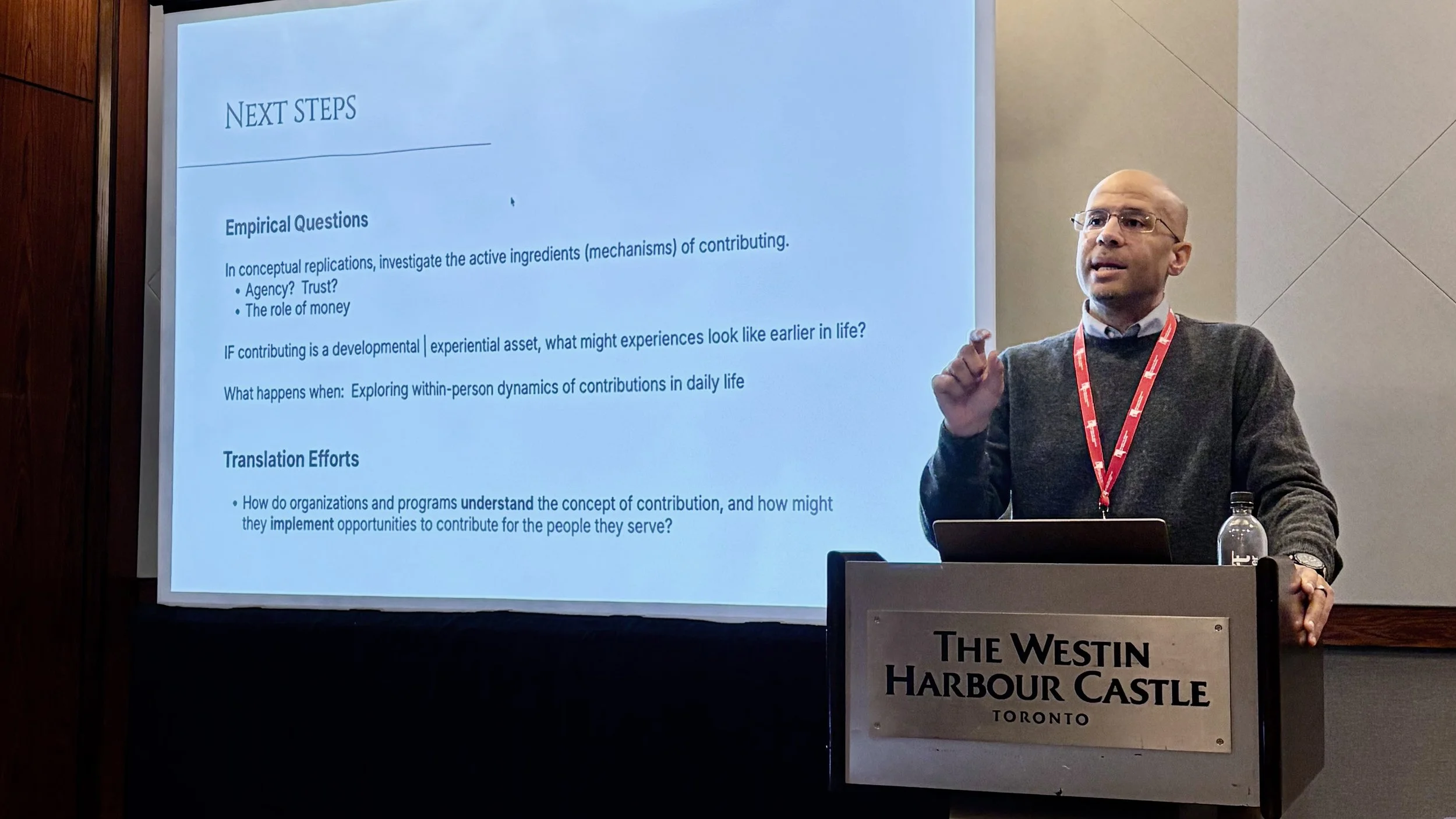
Anthony Burrow, PSiX director, starts the symposium on findings from the Contribution Project during the Society for Research on Adolescence Biennial Meeting in Toronto, Canada on April 18, 2026 (Photo credit: Patrick Hill/Washington University in St. Louis)
Anthony Burrow, director of PSiX, opened with context on how the project began, then presented initial findings with Christopher Davis, doctoral candidate at Cornell University, in "The Contribution Project: An Overview and Initial Investigation." Drawing on two years of data from 338 college applicants, the pair found that students who were selected to be contributors (240) reported greater purpose and belonging afterward than those who weren't selected (98), with the strongest gains among students who saw themselves as having lower social status. The findings suggest contribution opportunities may be beneficial for students facing socioeconomic inequities.
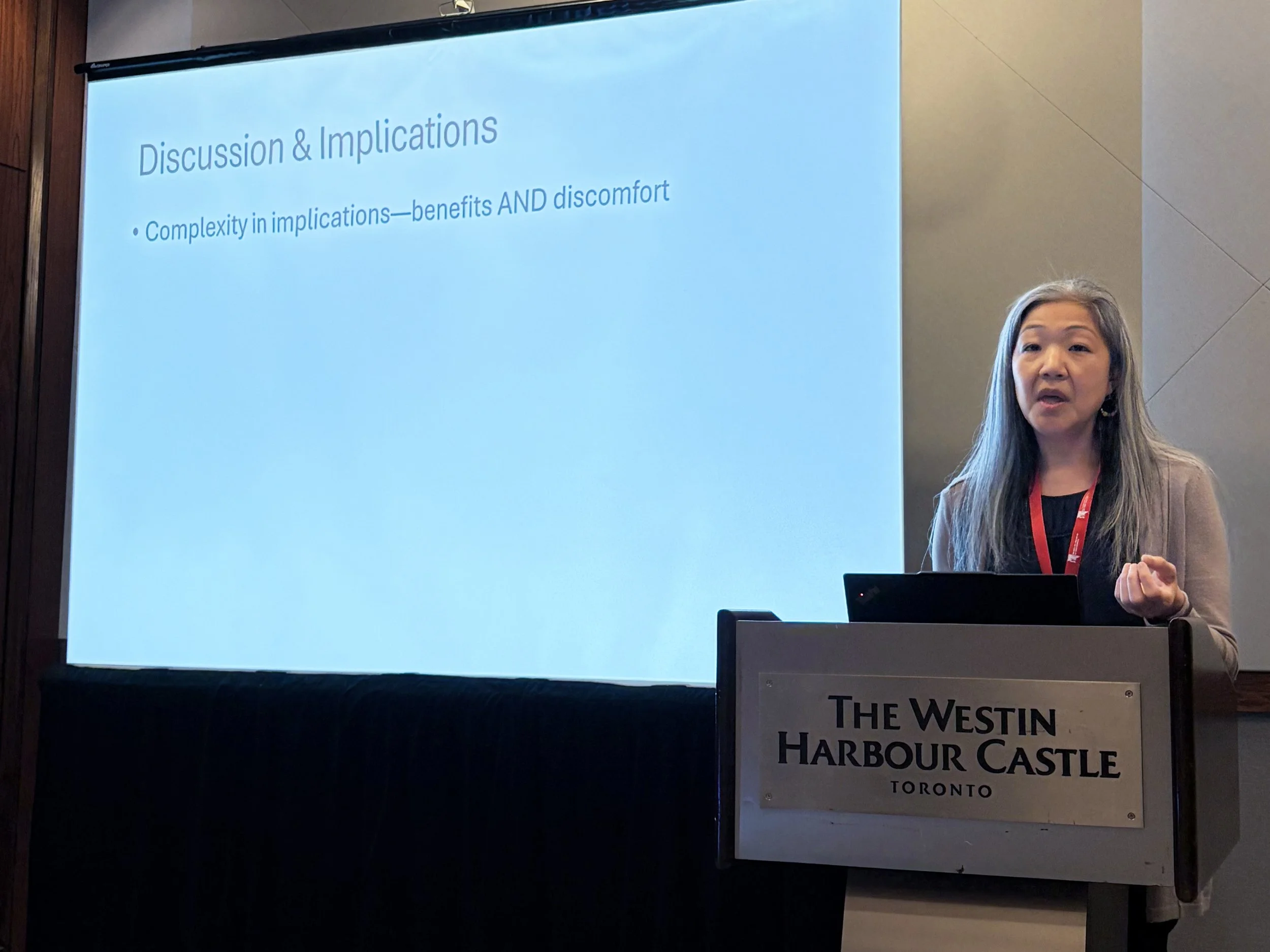
Lisa Kiang, professor of Psychology at Wake Forest University, presents during the Contribution Project symposium at the Society for Research on Adolescence Biennial Meeting on April 18, 2026 in Toronto, Canada. (Photo credit: Patrick Hill/Washington University in St. Louis)
Lisa Kiang, professor of Psychology at Wake Forest University, and Nancy Sin, associate professor of Psychology at the University of British Columbia followed with "Psychosocial Benefits of Contribution: Outcomes from a National Youth Contribution Program," reporting on 385 adolescents recruited from 26 youth-serving organizations nationwide. Participants showed higher levels of purpose, social network strength and feeling needed and/or useful. However, there were unexpected declines in positive affect and self-esteem, a mixed picture Kiang and Sin say points to both the promise and complexity of contribution-based programming.
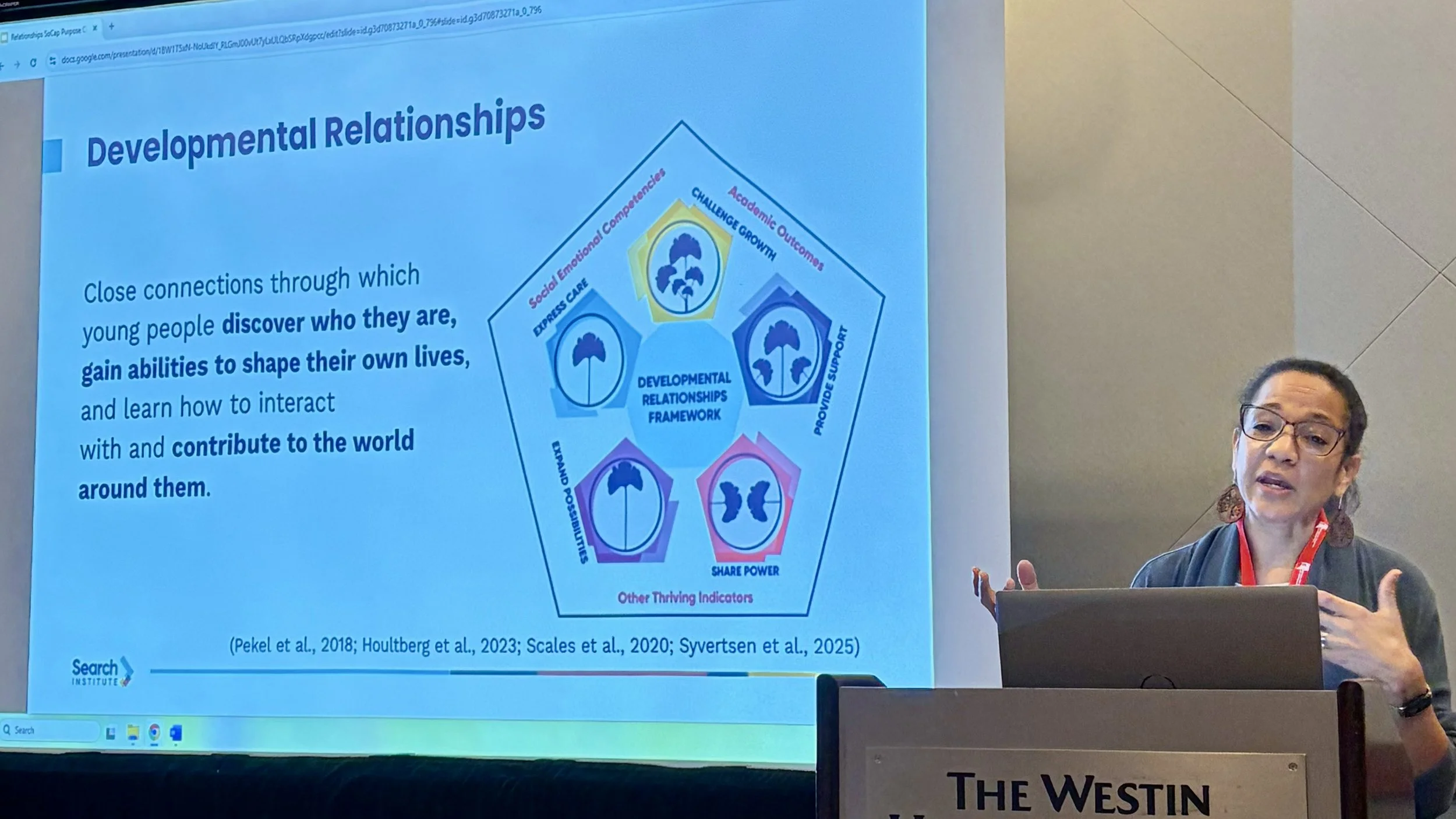
Joanna Williams, from the Search Institute, presents research during the Contribution Project symposium at the Society for Research on Adolescence Biennial Meeting in Toronto, Canada on April 18, 2026. (Photo credit: Patrick Hill/Washington University in St. Louis)
Joanna Williams, with colleagues from Search Institute, presented "Mobilizing Relationships: Social Capital and Purpose in Adolescence," examining how supportive relationships with parents, friends, teachers and program staff relate to a young person's sense of purpose. Among 414 participating youth, both the strength of these relationships and a young person's ability to mobilize their social network toward their goals predicted higher purpose, with network mobilization emerging as the more durable predictor over time.
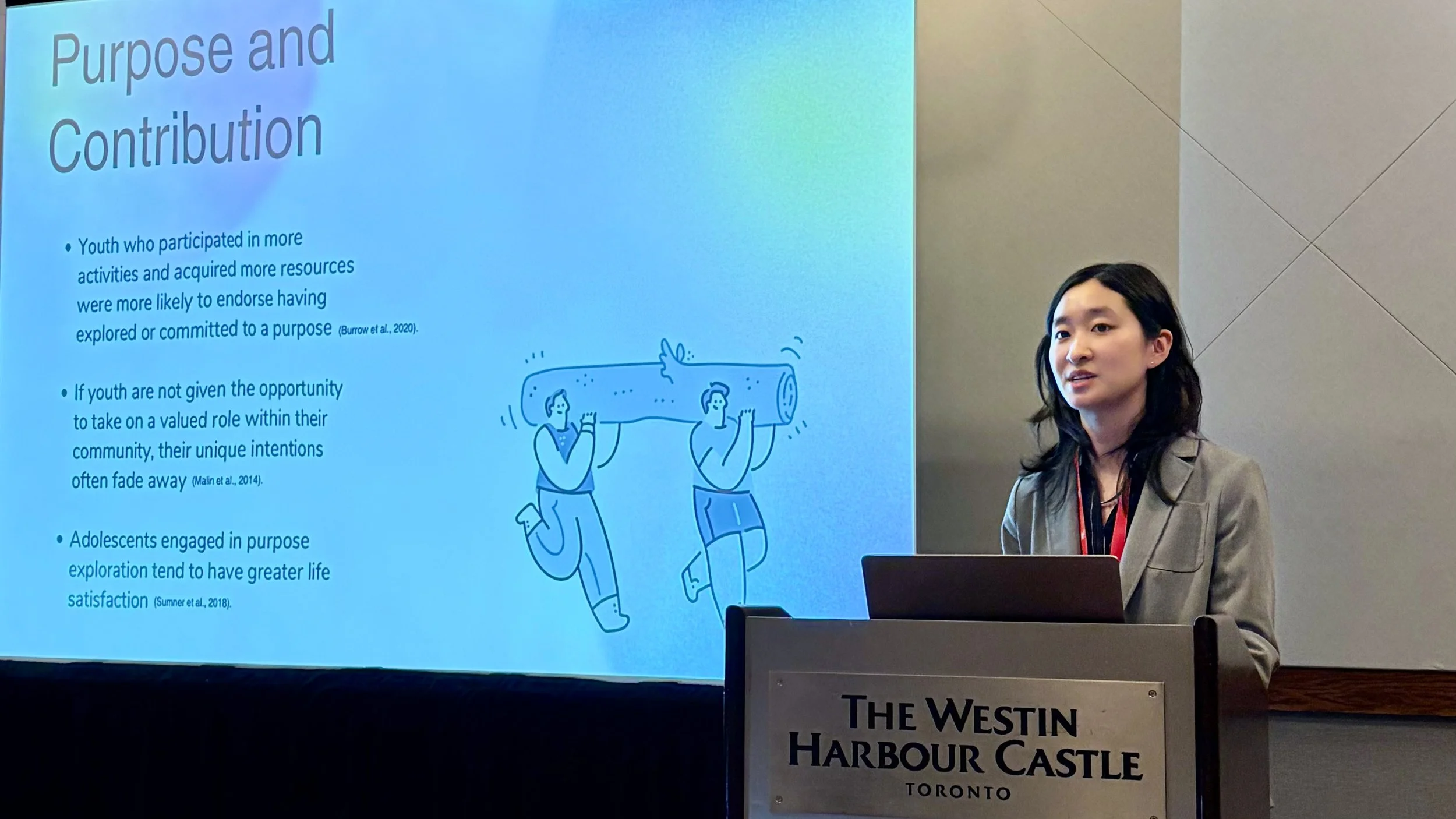
Sang-Mi Lee, a Master of Social Work student at the University of Georgia, wraps up the symposium at the Society for Research on Adolescence Biennial Meeting on April 18, 2026, in Toronto, Canada. (Photo Credit: Patrick Hill/Washington University in St. Louis)
The symposium closed with "Youth and Their Contributions: The Why, What, and Where," presented by Sang-Mi Lee, a Master of Social Work student at the University of Georgia, alongside Burrow, Kiang and Williams. Analyzing 44 youth-designed projects, ranging from prenatal vitamin access campaigns to educational platforms for students with visual impairments, the team developed a new coding framework showing that young people's contributions most often centered on basic needs, mental health and social connection. The results challenge assumptions that adolescents are primarily self-focused, offering a roadmap for future youth-directed programming.
Together, the four presentations offered a comprehensive look at how contribution shapes purpose and wellbeing in adolescence, from initial impact to underlying mechanisms to the real-world projects young people choose to pursue.