
On Purpose — Anthony Burrow
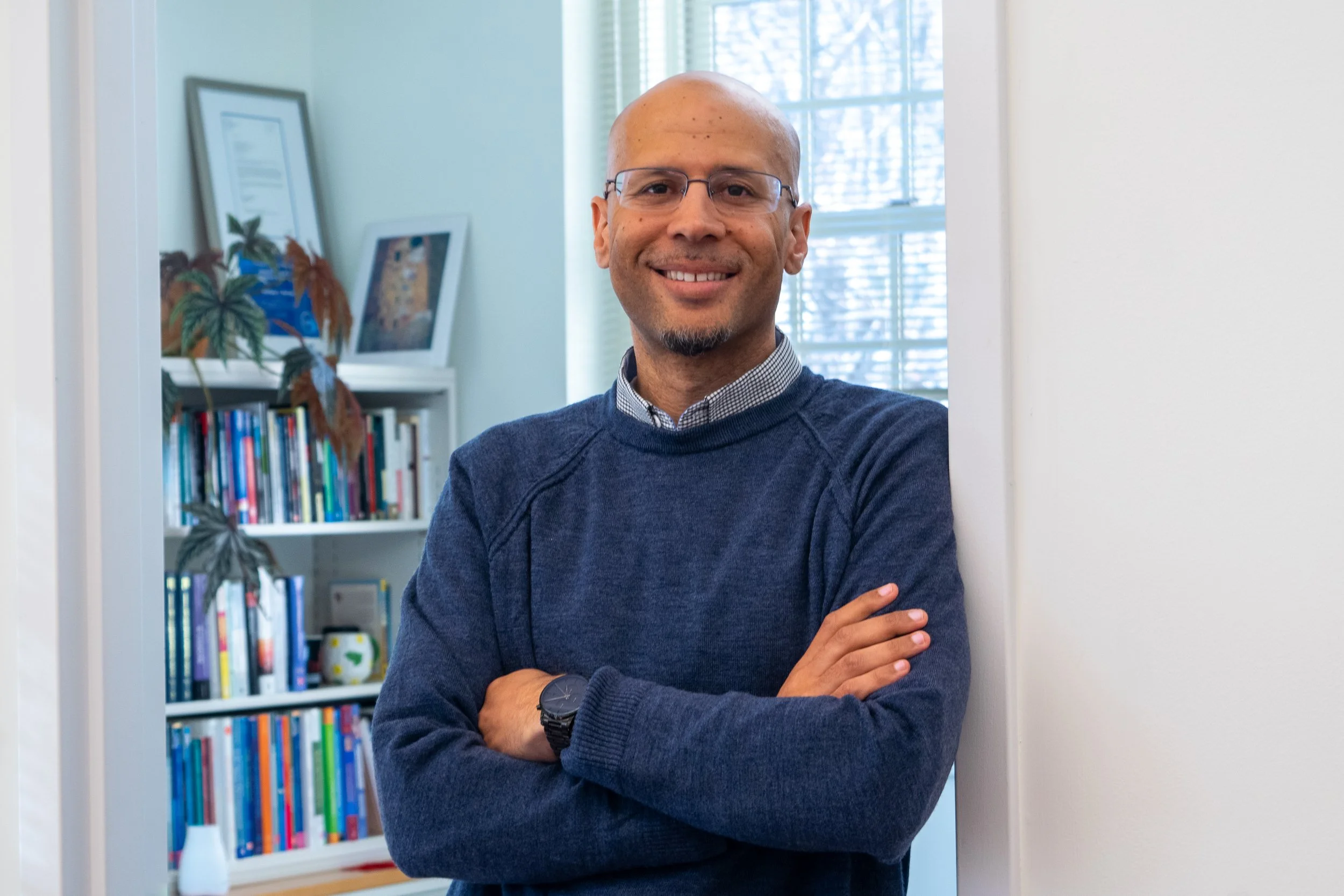
Today we feature Anthony Burrow who is the founder and director of the Purpose Science and Innovation Exchange (PSiX) and co-founder of Purpose Commons, where he helps build an expanding ecosystem for purpose-focused work.
He also directs the Purpose and Identity Processes Lab and is a professor of psychology at Cornell Human Ecology. His research investigates how purpose functions as a psychological resource across the life course and how racial identity shapes everyday experiences, with particular attention to sources of resilience. Across his roles, Burrow brings together various stakeholders to collaboratively deepen the understanding of how purpose develops and operates in everyday life.
We talked with Burrow about purpose - why he was drawn to study it, what it is, what it’s not, and what we should understand about it.
Q: To begin broadly- how would you define purpose and what does it mean for a person’s life to have purpose?
Burrow: I really would define purpose as a forward-looking life aim. It is something prospective, a direction in one’s life. You could add more words, terms, and caveats to that definition, but at its core, purpose is a direction. And I think the value and utility of that in people’s lives is substantial. Having that aim corresponds with a wide range of benefits, psychologically, socially, and in health and well-being.
Q: What is your purpose today— or how do you currently make sense of it?
Burrow: I have no idea. I don’t know. So maybe that answers it. I feel purposeful, and I make sense of it by feeling like there are things for me to do. Part of it is curiosity and a willingness to explore whatever shape it might take on a given day. I feel purposeful pretty regularly, but I am not sure I could articulate exactly what it is at any point in time.
So in terms of content, I genuinely do not know what I would say my purpose is. But I can tell you that I feel like there is direction in my life, that I have a sense of purpose.
Q: What drew you to the concept of purpose or engaging in purpose work?
Burrow: A lot of influences contributed to my interest in purpose. I have always been drawn to questions of identity — that was my original entry point into academia. I am a developmentalist, so I think about change over time, about who we become rather than only who we are in the present. By talking about identity enough with advisors, mentors, and through reading the literature, the language around my interests began to shift. The questions I was asking about identity sounded, to others, more like questions about purpose.
It was almost as if the field named it for me. I realized that what I was really curious about was not just identity, but the forward-looking aspect of identity, as in who someone is becoming. So I followed that thread. When I finally read the purpose literature, it clicked. I thought, “yes, this is what I am actually interested in.”
I cannot claim a grand origin story where I set out to study purpose from the start. It was more that the world reflected it back to me. The field showed me where my questions belonged, and I embraced it. It’s cool that we call it purpose. That fits.
Q: What is one thing you think everyone should understand about purpose?
Burrow: There’s not a strong scientific basis for thinking it can be found. I think we’ve trafficked the word find in the purpose world oddly often. It’s unclear to me that purpose is something that can be found, and yet “finding purpose” is the narrative and lore. Every week there’s a bestseller promising three easy steps to finding purpose. And because we’ve talked about it that way so much, it feels true.
What the research does suggest is that purpose can be activated, facilitated, developed, or cultivated — whatever word you prefer. People live in environments, and their sense of purpose is usually in relationship to that environment. So maybe you don’t feel a strong sense of purpose because this environment doesn’t have a lot of kindling to catch fire. The idea that purpose is something you “go out and search for” is strange given we have no real data that that’s how it works.
So that’s what I would want people to know: the certainty of finding purpose is not certain at all. There are other ways purpose can emerge, as you may already have it, and it simply needs to be unlocked or made more salient. That shift — from searching externally to recognizing something interna l— changes everything.
We’ve done a study, and then replicated it, asking people how much control they think they have over finding purpose. Most people think they have a lot or a good amount of control. They believe they can find it if they try. Fewer think purpose is not found but ordained or bestowed. The interesting part is that if you believe purpose is something you can find, not having it is a vulnerability. People who think finding purpose is up to them, when they don’t have it, show all kinds of negative outcomes.
If you have purpose and think you found it, great. But if you don’t, and you think you should be able to find it, that becomes a personal failing in your mind. Meanwhile, if you don’t think purpose can be found, lacking it doesn’t predict those same problems. So we have to help people feel more purposeful and also rethink the narrative that purpose is something you find.
Children illustrate this well. Nine-year-olds don’t walk around feeling particularly purposeful, but they also don’t believe they should be able to go find purpose — and that combination is not a problem.
Q: From your perspective, do you think people today are experiencing an increase or decrease in their sense of purpose? What might explain that?
Burrow:I think the world today is making it more challenging to rely on a certain future. Who knows what jobs will exist five or ten years from now? When society is more stable, a sense of purpose may be more likely because purpose is a commentary on the future. If the future is shifting, the direction you are heading may not mean the same thing tomorrow.
So it may be harder to cultivate or activate purpose when the world outside your window is changing so drastically. If purpose is a prospective aim, and the prospect keeps moving, it becomes harder to latch on and sustain that sense over time. That doesn’t mean purpose itself is declining, as it may be that the context needed to support purpose is moving. And we don’t have enough longitudinal data with consistent measures to say definitively whether the purpose is rising or falling.
Todd Kashdan talks about three components of purpose: scope, strength, and awareness. Strength is how strongly you feel purposeful. Scope is what you are aiming at—something broad like “helping people,” or something very specific like “working as a doctor in this hospital.” Specific purposes are harder to maintain in a rapidly evolving world because the target keeps moving. In a world where technology and social structures change quickly, confidence in one’s purpose may drop even if the purpose itself hasn’t changed.
Q: If you could leave readers with one guiding thought about living a purposeful life, what would it be?
Burrow: Don’t decontextualize purpose, and don’t focus solely on individual purpose to a fault. Purpose can be a window into what someone wants to do in their world. Paying attention to purpose reveals what people are working toward, creating, or contributing. And that has social implications.
Purpose invites interaction. It invites collaboration, recognition, and support. Rather than simply measuring purpose, we can participate in it. When we notice what someone is trying to do in their world, we can help unlock that, support it, or connect with it. Purpose should not just be observed, as it should be engaged with.
Examples can help illuminate purpose, but we have to remember that they are just examples. Heroic or highly visible exemplars don’t capture the millions of everyday purposeful acts that also contribute to well-being, such as people sharing ideas, creating opportunities, or making small contributions that matter.
Q: Before we wrap up, is there anything we didn’t cover that you think is important to understanding your perspective on purpose?
Burrow: We have to be clear about the difference between sense of purpose and content of purpose. When people hear the word purpose, they often listen for content — “what is your purpose?” — but much of what is interesting and predictive is the sense of purpose. Do you feel purposeful? That is different from being able to articulate the content of that purpose.
Just because someone can name their purpose doesn’t mean they feel purposeful, and just because someone cannot articulate it doesn’t mean they lack it. Separating those two ideas is important.