
On Purpose — Patrick Hill
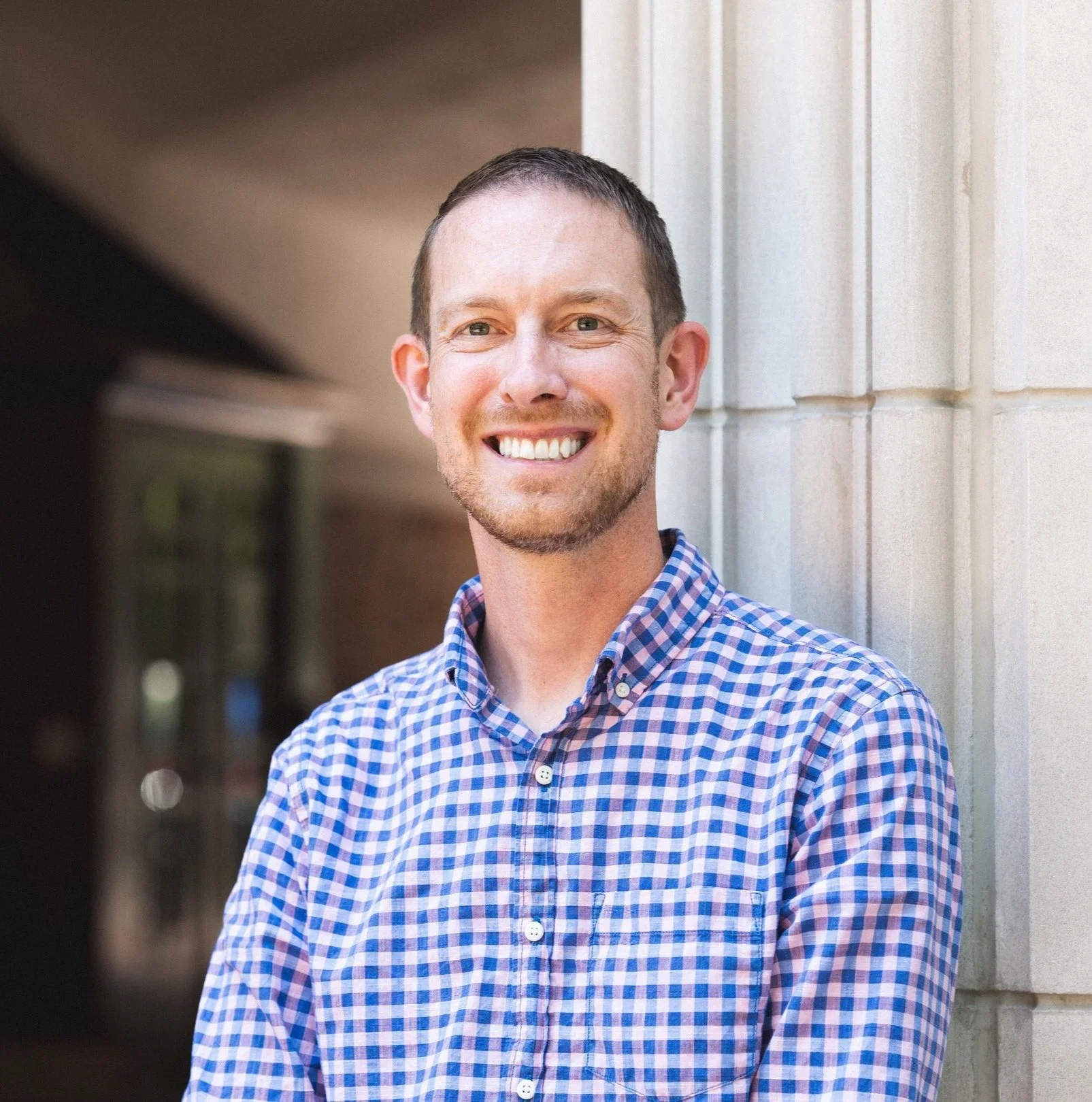
Today we feature Patrick Hill, who is a leading researcher in purpose science and the director of PSiX’s Lab of Labs, a unified research group focused on advancing purpose research through collaboration. He is also a professor of psychological and brain sciences at Washington University in St. Louis and director of the Purpose, Aging, Transitions, and Health (PATH) Lab.
His work investigates how individuals explore and commit to a life purpose, how purpose predicts well-being across development, and how traits such as gratitude and forgiveness shape relationship outcomes. While his research highlights the broad influence and inner workings of purpose, Hill emphasizes the unique, evolving nature of each person’s sense of purpose and the ever changing questions guiding the field.
We talked with Hill about purpose - why he was drawn to study it, what it is, what it’s not, and what we should understand about it.
Q: To begin broadly- how would you define purpose? And what does it mean for a person’s life to have purpose?
Hill: There are many definitions of purpose in life, and in the PATH lab we approach it from a developmental perspective. We think about how purpose can be defined in a way that allows us to study it from adolescence through older adulthood. We tend to conceptualize purpose through three primary dimensions.
First, purpose provides direction, a sense of where you are headed and where you want to go. Importantly, purpose is not something you ever fully “achieve,” which is beneficial because it allows your sense of purpose to evolve rather than disappear once you reach a particular point.
Second, purpose is tied to engagement in worthwhile activities. Purpose promotes movement toward the things that matter to you. Third, purpose is related to commitment to your values, to your identity, and to what you deem meaningful.
Bringing these together, we think of purpose in life as something that guides you from one day to the next, gives you a sense of direction, encourages you to engage in activities that align with where you hope to go, and reflects who you are and what you care about.
So what does it mean to have purpose? It means knowing, even loosely, what you want to do from day to day, and having an idea of the long-term direction you are moving toward. Some of our research shows that this long-term aim matters for daily functioning. People with a sense of purpose tend to be less reactive to everyday stressors or even to positive events. Someone who gets overwhelmed by stress or swings too intensely into excitement may have more difficulty staying connected to their long-term direction. But individuals with purpose still experience stress and joy, but they just recover or recalibrate more steadily, maintaining their course over time. In daily life, that means purpose functions as an anchor — helping someone stay grounded in who they are and where they are headed, regardless of fluctuations in the moment.
Q: What is your purpose today— or how do you currently make sense of it?
Hill: When I think about purpose in my own life and where I am going, it feels tricky. I sympathize with people who say they find it difficult to articulate their purpose, as it is a big question, and that can make us shy away from it. Over the last few years, I have learned a lot about what purpose and direction might look like for me. During the pandemic, when things were taken away, I had to ask myself, what truly mattered? What did I value most when the noise went quiet?”
That reflection led me to change aspects of my work, such as restructuring the lab, shifting some relationships, and focusing more intentionally on what mattered most. For me, purpose centers around mentoring the next generation of researchers. Mentorship is the part of my job that excites me, far more than accolades, administrative roles, or climbing higher in the university structure. I feel most energized when I leave work on a day spent talking with students or mentees about their interests and research directions. That is what guides me.
But to be honest, I do not know if I would have stated my purpose so clearly without being asked. It fluctuates. It takes shape through daily experience, and that is exactly what matters. Purpose is dynamic, alive, something noticed in motion rather than named in abstraction.
Q: If you could leave readers with one guiding thought about living a purposeful life, what would it be?
Hill: One thing I think everyone should understand about purpose is that it is a lifelong journey. It is not something you either have or don’t have. It is accessible at every point in the lifespan, as purpose is something you can develop, maintain, cultivate, and deepen. But that also means it is never finished. There is no final moment where you have “found” purpose and the journey ends. Instead, purpose is the ongoing work of aligning everyday life with what you believe matters most.
Even when something feels purposeful, there is value in digging deeper. What exactly generates that feeling? Is it a one-on-one connection? Guiding others? Watching growth unfold? Exploring those layers helps us understand what purpose truly means for us.
And that is the exciting part that purpose is predictive of important outcomes, yet it is also changeable, buildable, cultivable. It is not a fixed trait you must simply accept. Even if someone feels low in purpose, there are pathways forward. We can grow it, strengthen it, and adapt through obstacles. Purpose is not something we arrive at, as it is something we continually become.
Q: What drew you to the concept of purpose or engaging in purpose work?
Hill: When it came to developing this interest in purpose, I will admit that purpose was not something I ever expected to study. If I think about it as a journey, when I was an adolescent I had no interest in psychology at all. I took a high school psych class, did not enjoy it, and moved on. I only became interested in psychology later in college, and even then I was in a completely different subfield. It was really by serendipity that I ended up in a lab where people were beginning to talk about purpose, and that is where meaningful relationships started to form, including with the director of PSiX [Dr. Anthony Burrow], way back then. [We] have worked together ever since, because the questions surrounding purpose continue to energize and challenge us.
What keeps this work exciting is how much we don’t know. If purpose were simple and fully figured out, there would be no questions left to ask. I often say that if it were an easy construct, I would not have a job today. But purpose keeps expanding. I just returned from a talk in California where I shared that every time a new student enters the lab, they bring five new questions, Have you thought about this? What about that?” And most of the time, the answer is no — which is the exciting part. We get to keep exploring.
The people are a core part of why I have stayed in this work. Studying purpose has brought me closer to colleagues, students, and researchers around the world who are curious, creative, and driven by similar questions. I do not think I would still be doing this if it were not for that. Purpose is inherently connective. Everyone can see themselves in it, either through their personal experience or their academic interests, in ways that simply do not happen with many other psychological constructs. That is what makes studying purpose so special.
Q: From your perspective, do you think people today are experiencing an increase or decrease in their sense of purpose? What might explain that?
Hill: I think purpose is such an individual-level process. People sometimes ask me questions like, “Did everyone feel less purposeful during the pandemic?” and it is tempting to reach for broad narratives about what affects people universally. But our research shows that very few things influence everyone in the same way.
For example, when I was stuck inside my apartment during the lockdown, I was actually very productive. We wrote a great deal about purpose during that time and it was one of our most active years. I would not want to return to that context, but it demonstrates how differently people respond to the same environment. For some, it was motivating. For others, it was depleting. It depends on the individual.
So I do not think we can say that, collectively, purpose is increasing or decreasing. What we can say is that obstacles and challenges create vulnerability. During stay-at-home orders, many people had fewer opportunities to act on their sense of purpose. Today, we continue to see fluctuations in whose voices are heard, whose identities are affirmed, and who has opportunities to explore who they are. Those patterns shift across communities, universities, nations, even classrooms, as some people feel permission to explore purpose, while others feel unseen or unsupported.
When we think about vulnerability in purpose, identity is central, such as knowing who you are, and engaging meaningfully with your life. Our work often focuses on which individuals feel able to engage with their lives, and how we build communities that support that engagement. We try to move away from framing purpose as something individuals must develop alone. Instead, we ask, “what structures can reduce barriers? How can environments — at the interpersonal level, institutional level, or societal level — make it easier for people to cultivate and sustain a sense of direction?” Purpose is not only a personal responsibility, it is also something we can nurture collectively.
Q: If you could leave readers with one guiding thought about living a purposeful life, what would it be?
Hill: One thing we like to emphasize is that purpose is accessible to everyone. Returning to your earlier question, one challenge in helping people feel purposeful is that our culture — expressed through social media, self-help books, or public narratives — often frames purpose as something big, bold, and world-changing. These narratives make it seem as if purpose only counts when it reshapes society or impacts thousands of people.
But our research consistently shows that it is not the size or scale of one’s purpose that matters, but rather it is the sense of purpose. People benefit psychologically and socially even when their purpose is small, personal, or local. You can experience meaning without naming a grand mission. You can live purposefully even when your purpose is something intimate, quiet, or grounded in the everyday.
Purpose does not have to be big or bold. That is the core idea. And when people realize that, they often feel more empowered to explore rather than shut down the conversation. I sometimes give talks to retirement communities where I share a definition of purpose, and people respond, “Oh, that’s for young people. I’m done.” That belief comes from the narrative that purpose is about changing the world, rather than shaping one’s corner of it.
Big purpose is beautiful, but not the only kind. You do not need to cure a disease, launch a movement, or transform a nation to live with direction and meaning. Purpose can simply guide you to show up for others, grow through experiences, make small contributions, or support the lives you touch. So do not feel discouraged if your purpose doesn’t feel world-changing. Mine probably doesn’t reshape the entire world either, but it helps people. And that matters.