
On Purpose — featuring Christopher Davis
We’re introducing the new “On Purpose” series, where we interview individuals working in purpose-focused spaces in order to deeply understand what drove them to the field, along with how they define purpose within their own personal lives.
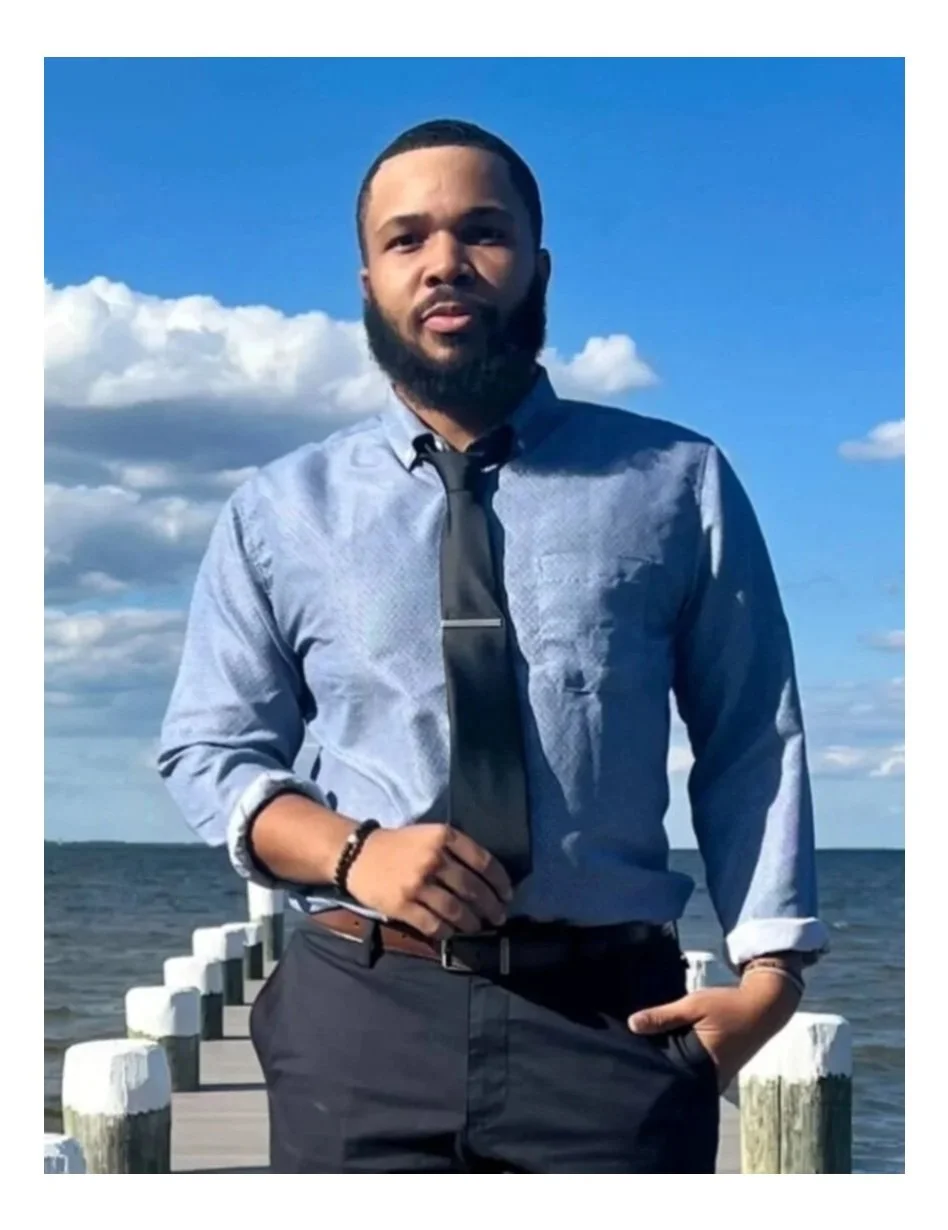
In this kick-off edition, we feature Christopher Davis, a fifth-year Ph.D. candidate in developmental psychology at Cornell University and lab advisor for the Purpose and Identity Processes Lab. His research examines how control-related cognitive and psychological processes shape the development and maintenance of psychopathology, as well as how these mechanisms support or hinder well-being. Drawing on prior training in clinical mental health counseling at Johns Hopkins University and human development and psychology at Harvard University, his earlier work centered on understanding psychological factors in adolescent psychopathology.
We talked with Davis about purpose - why he was drawn to study it, what it is, what it’s not, and what we should understand about it.
Q: To begin broadly- how would you define purpose? And what does it mean for a person’s life to have purpose?
Davis: A technical definition would be that purpose is a guiding force that someone is constantly moving toward. Something they find important, very fulfilling, and something that, hopefully, they can never fully attain. A lot of [people] confuse [purpose] for jobs or goals they might have. But the interesting thing is that everyone thinks about it. Everyone ponders on it at some point, from all different walks of life.
Q: What is your purpose today— or how do you currently make sense of it?
Davis: I have switched career ambitions several times in a very short period. There were some that I really liked and some that I did not like as much. Back then, I told myself that if I did not like something, I would not do it. There are a lot of aspects about what I do now that are way more stressful, way more technical, and time consuming, but I have never felt like I have worked a day. I think it is because I am able to blend a lot of the things that I am interested in and that I think are indicative of my purpose.
For one, I love solving problems. I love figuring things out, and I also like helping people. If I can put both of those together, it is really cool. I also love puzzles, which I guess goes with the problem-solving part, and I like to learn.
I did other things and they just were not doing it for me. I would hate going to work, I would think,I do not know if I want to do this.” Sometimes, I would be good at the job, sometimes not. But it was not a competency thing, it was more like I did not want to go to work. Before I even thought about purpose or knew anything about the literature, I knew I did not want to wake up and think, “This again.”
Funny enough, I figured out what lane I wanted to be in by implicitly invoking purpose. The things I felt more purposeful about gave me the feeling that this is not work, like you would have to drag me out of work or people would have to convince me to go to sleep. So that, to me, was my implicit way of using purpose to guide my career choice.
Q: What is one thing you think everyone should understand about purpose?
Davis: I know a lot of people who do not like what they do on a daily basis — their job, their hobbies, sometimes even their friend groups. But if we can do things that we feel purposeful about, we do not necessarily need to know what our purpose is. If we know we feel purposeful when we are engaged in problem solving, or helping others, or those other things, then I would say to figure out ways, or find ways in your life, to make sure you are in those spaces where you do feel purposeful.
When you are in those spaces that you feel purposeful, it usually does not feel like work. It does not feel like something extra you have to do, as it is something that you enjoy. And, it can be a guiding anchor. You might not know what your purpose is right now, but if you know what you feel purposeful about and you continue doing those things, then you might get some clarity on your overarching sense of purpose.
Q: What drew you to the concept of purpose or engaging in purpose work?
Davis: This was actually when I applied to Cornell. I was a therapist, and I was working with a client whose mother passed away very suddenly. At the same time, she was about to get married, she had another life about to start but she felt like her old life, in a way, had ended. She was very sad, and she met criteria for depression because her mom had died a while before. There are a lot of techniques and interventions that could be used, but I wanted to look a little beyond them.
The idea of purpose came up when I was reading different things, and I thought, let me learn more about this. I stumbled upon a talk from [Anthony Burrow] about purpose. After that, I read more about it, andI was invested. I started reading the literature and thought, dang, this is not just useful, it is clinically useful, and we have not really taken advantage of that.
There are some papers here and there about purpose and depression, or purpose and psychological functioning more broadly, but there was nothing that would specifically help the client I was working with. So, a big motivation for studying purpose was to help people like her. There is a large demographic of people who could benefit from these ideas that we already see working out in the world.
I came to Cornell to, one, learn from the dude who I saw on the YouTube video, which was a great decision. And two, to use my clinical knowledge and my new knowledge about purpose, to have them marry, and see if we can come up with something more efficacious for people like that client.
Q: From your perspective, do you think people today are experiencing an increase or decrease in their sense of purpose? What might explain that?
Davis: Maybe it is not a question of magnitude. Maybe it is a question of clarity. People might feel more purposeful, but they are not clear about what their purpose is. And it could be the case — and I do not have any data on this — that nowadays your generation has way more options than any other generation ever. That has been the pattern throughout human history. The more we progress, the more opportunities, and the more decisions we have to make. But the drawback is that you now have almost an infinite number of purposes you could pursue. Which one is it? So I do not think youth are less purposeful. I think they might actually be more purposeful, but do not know it.
Q: If you could leave readers with one guiding thought about living a purposeful life, what would it be?
Davis:Customize it to you. Don’t look around and see this person as purposeful and think, maybe I have to do exactly what they do. You can take their perspective and allow that to form you in a way, but give yourself room to experience purpose the way you experience it. You and I might experience it in two completely different ways. That doesn’t mean either is right or wrong. What matters is what makes a person feel purposeful, because my suspicion is that if you feel purposeful in what you’re doing, no matter what it is, you’re going to feel like your life is worth living.
There are some people who are making millions of dollars and don’t feel like they have a sense of purpose. Based on the numbers we have about socioeconomic status and happiness, making a lot of money doesn’t necessarily make you happy. I think the secret sauce might be living a life that you deem purposeful. That is probably when we look back, when we’re eighty, sitting in a rocking chair in our front yard, and say, I’m glad I did that, rather than saying, why didn’t I actually go toward this?
Also, the thing that makes someone feel purposeful is something other people might not like. I’ll give you a good example. I don’t come from a very educated family. So when they think about me getting my Ph.D., they think, “He’s probably just stressed. He’s probably hating life. It’s probably just horrible.” And I’ll talk about some of my work, or this and the third.
The difference is the thing that I feel purposeful about. It leads me to do things that other people might see as boring, stressful, or annoying, but I don’t feel that at all. I think the reason I’m able to do it nonstop, and at what I think is a high level, is because I would be doing this in my free time. Sometimes, when I force myself to say I’m not going to be on the computer today, I’m still thinking about this stuff. When I’m able to actually see it come together, I think, this is awesome.
So it might not look how other people want it to look, but if you know what you feel purposeful about, then I would say, go forward with it unapologetically.