
On Purpose — Sarah Espinel
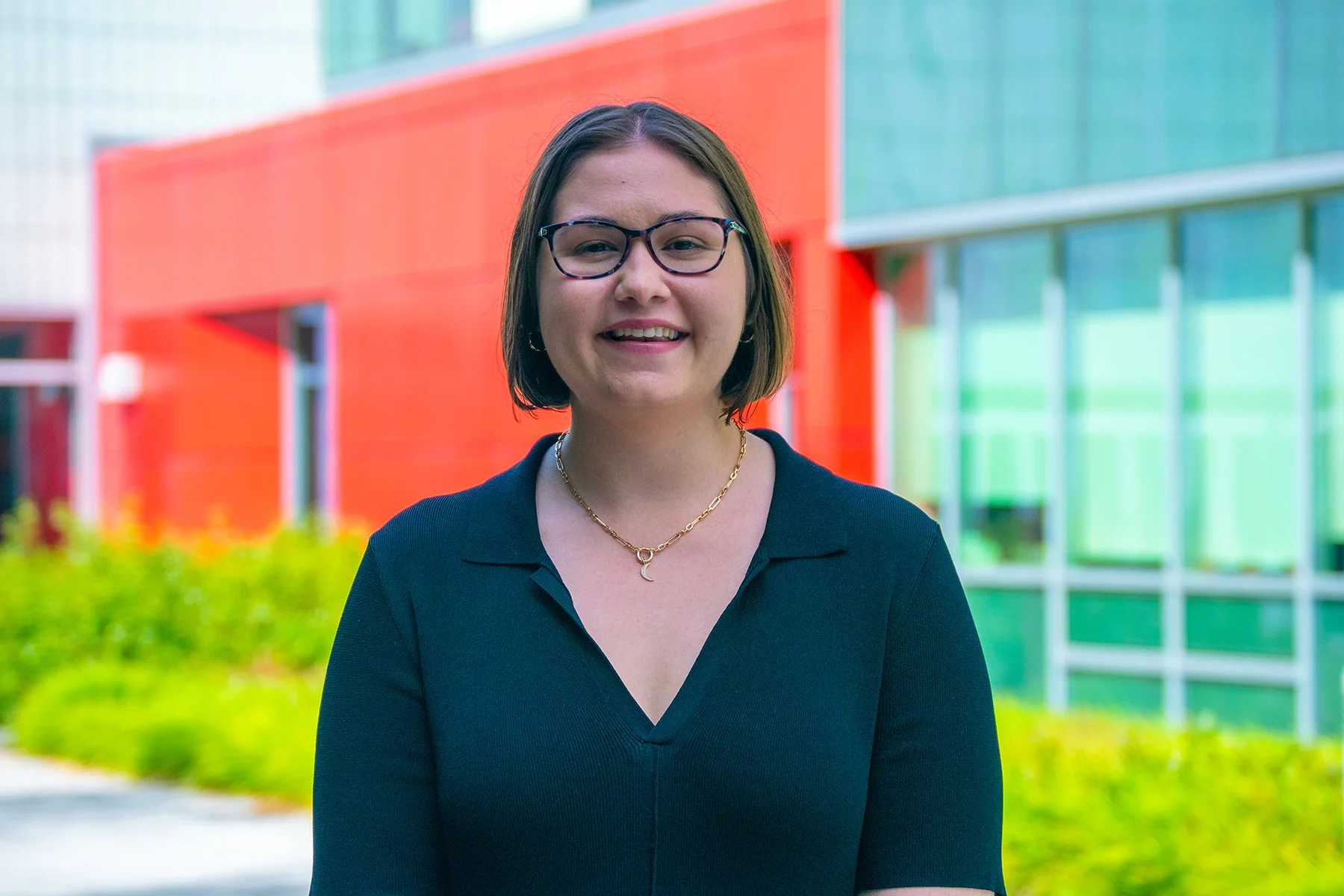
Today we feature Sarah Espinel, who is the director of research for the Purpose Science and Innovation Exchange (PSiX), where she helps guide the development of the National Youth Purpose Survey and other emerging research initiatives.
She earned her Ph.D. in community psychology and women & gender studies from the University of Virginia, where her work examined how gendered racism shapes the health and well-being of women of color, how stereotypes influence social interactions, and how marginalized youth experience positive development. With a comphrensive background in community psychology and a focus on identity and intersectionality, Espinel is committed to evaluating how lived contexts shape purpose.
We talked with Espinel about purpose - why she was drawn to work on purpose at PSiX, what it is, what it’s not, and what we should understand about it.
Q: To begin broadly- how would you define purpose? And what does it mean for a person’s life to have purpose?
Espinel: One definition of purpose is that it is a meaningful direction in life that organizes your efforts and pursuits. For me, that really resonates, because I think purpose means living a life that is in tune with your values, while recognizing that as you develop, your values and perspectives develop too. So what it means to live purposefully — to live in alignment with your values — will naturally change as you grow, learn, and reflect.
I do not think purpose has to be tied to work or to a huge life goal. To me, it is something that guides your time, your energy, the people you surround yourself with. What that entails will grow and change as you grow and change. It is something that moves with you, day to day, guiding you. And for it to hold power, you have to be conscious of when you feel purposeful, give yourself time and space to reflect on how what you do or who you hang out with makes you feel.
Q: What is your purpose today— or how do you currently make sense of it?
Espinel: With the developmental stage that I am in right now as a young adult, I have more autonomy and agency than I have ever had, but I am still figuring out who I am and what I want. I feel as if my purpose at the moment is two-sided: to nurture and to continue growing. On the nurturing side, that means showing up for the people I care about by making sure they feel happy, confident, motivated, and supported. Sometimes that looks like a mothering role of reassurance, encouragement, and care. Other times it means taking a more assertive role, giving someone the push or wake-up call they need, because I see potential in people, and we are so rarely given space to recognize our own strengths.
I am also committed to always learning, no matter how old I get, what degrees I have, or what experiences I possess. Staying open, taking in new experiences, and reflecting on them feels central to cultivating my sense of purpose.
Q: What is one thing you think everyone should understand about purpose?
Espinel: I think in popular media, self-help books, and on social media, people see purpose as something you "find." It is always phrased as "I found my purpose," or "how to find your purpose," or "four steps to find meaning in life." But I do not think purpose is something that can be found. I think it is something that should be cultivated and sustained over time. The language of "finding your purpose” makes it seem like there is an endpoint which I do not believe exists. It is not like climbing a mountain and reaching the top. The journey is what is significant, not the endpoint.
Q: What drew you to the concept of purpose or engaging in purpose work?
Espinel: I like thinking of purpose as a resource that everyone has access to, one that can improve well-being, whether that be physical, mental, financial, or social. If purpose is something that can be cultivated, it can benefit anyone, and that is powerful. Especially when thinking about people from marginalized backgrounds or those facing hardship, it is meaningful to consider that purpose can be something folks draw on to motivate and sustain us through difficult times. I am grateful to be part of something that highlights young people’s happiness and agency, instead of studying them from a deficit-based perspective.
Q: From your perspective, do you think people today are experiencing an increase or decrease in their sense of purpose? What might explain that?
Espinel: I do not know if it can be captured as simply as an increase or a decrease. I think it is more that people may be experiencing a lot of barriers in the systems they engage with that make it difficult to cultivate and sustain a positive sense of purpose. Right now in the United States, it is not an overstatement to say that people’s lives and ways of living are being threatened. This kind of environment can have different impacts on people’s sense of purpose depending on how they react to it. It can motivate people toward an activist orientation, toward fighting for themselves, for their communities, for policy change. But it can also make people feel disempowered — like the systems are too large and they cannot make an impact.
But, I think young people today have strong values. They care deeply, they are passionate, and they are motivated to make a difference because their futures and their ways of life are on the line. So while the desire to feel purposeful is strong, the context may hinder it.
Because of that, I do not think the question is simply whether purpose is increasing or decreasing. It feels more like we are living in a moment that makes purpose cultivation uniquely challenging.
Q: If you could leave readers with one guiding thought about living a purposeful life, what would it be?
Espinel: As people contemplate their sense of purpose, I would recommend starting where you are and thinking small. I think the narrative in our society is that purpose is this big thing, one goal you work toward your whole life, and then you achieve it and it is finished. But purpose can be a guiding principle for how you live, a way to check in with yourself about whether how you are living your life makes you feel good.
I would encourage people to carve out time in their daily lives to sit with themselves and reflect. What are my values? Am I living in alignment with those values? If I am, how can I create more of those opportunities for myself or for others? If I am not, what is getting in the way? Is it me? Is it the systems I’m in? And what might I do to change that? For me, purpose works like a guiding light when everything else feels dark.
Being an adult and working full time is hard. You work eight hours a day, come home, cook, clean, and by the time that is done, you might have only two hours to yourself. Two hours out of a whole day. Reflecting on if what I am doing makes me feel purposeful helps me make sure that I use that time in a way that feeds my soul.
Q: Before we wrap up, is there anything we didn’t cover that you think is important to understanding your perspective on purpose?
Espinel: The way we talk about purpose can sometimes imply that the only purposes that matter are those tied to work, productivity, or capitalism. Or tied to gender norms and social scripts, like pressure to marry, have children, marriage, and get a house in the suburbs, as if those are the universal benchmarks of a meaningful life. And if someone is not moving toward those markers, the message can become, “Then what are you doing?” As if they are aimless because they are not aligning with what society has agreed upon, or been taught to value, as purposeful.
Instead, let people discover purpose for themselves and nurture it, even when it does not look like your version of purpose, or align with what you personally value. I think lifting up a diversity of voices and honoring many forms of purpose is important. It expands what we consider valuable.