
On Purpose — Ravenel Davis
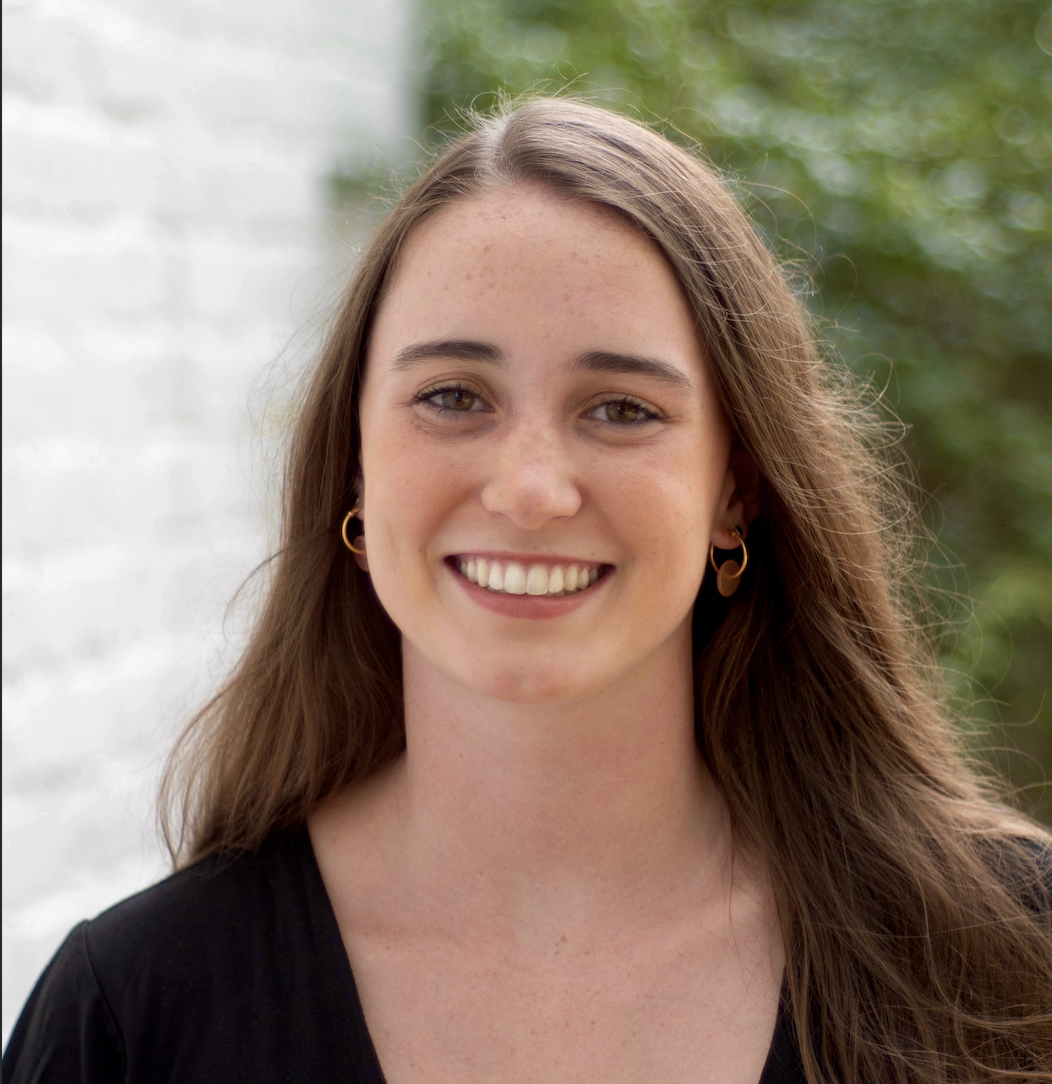
Today we feature Ravenel Davis, who is a second-year Ph.D. student in human development at Cornell University and a lab advisor for the Purpose and Identity Processes Lab. Her research focuses on how adolescents develop a sense of purpose, how narrative identity shapes that process, and how purpose relates to well-being across development.
Before beginning her doctoral training, she earned a bachelor’s degree in psychology from Haverford College and spent two years as the science associate at the Society for Research in Child Development, where she managed the organization’s grants and awards programs. Whether through her personal experience working with adolescents or her academic background in developmental research, she brings an essential insight into how adolescent purpose takes shape.
We talked with Davis about purpose - why she was drawn to study it, what it is, what it’s not, and what we should understand about it.
Q: To begin broadly- how would you define purpose? And what does it mean for a person’s life to have purpose?
Davis: How I think about purpose and how we think about purpose in the lab is that purpose is an overarching aim that gives your life direction and meaning. I think a lot about what guides your life day to day and what drives you to engage in meaningful activities. This looks vastly different for everyone, and there is still so much to learn about purpose. Right now, my interests are mostly in examining the context-dependent nature of purpose. A lot of research has focused, for good reason, on the benefits of having a sense of purpose, which is typically studied at more of a trait level. But questions like “What is your purpose in life?” can be really daunting. That is why I am also interested in purpose at the state level, such as thinking smaller scale, thinking about social connections, meaningful engagement, and moments that spark curiosity.
Q: What is your purpose today— or how do you currently make sense of it?
Davis: I am sitting here talking about purpose, and as cliché as it might sound, I think my purpose is to dedicate my work to the science of purpose. What really drives me, though, is improving the lives of adolescents. From a very young age, I loved working with youth. When I was around 12 or 13, I was babysitting, probably earlier than people should have trusted me with their kids. Later I taught at art camps, mostly ceramics and bookmaking, and then in college I began dedicating more of my studies to youth. I started with children, and now my interests are more centered on adolescents.
I think this big purpose gives my life direction, but it is the momentary experiences of feeling purposeful that matter day to day. I do not always associate those moments with work, although sometimes I do. Often it is the little things, such as moments of curiosity or creativity. For me personally, that might be ceramics, being on the playing field, running a race, or reaching a mountain summit after a hike. It is also seeing the success of my friends and family, and being around other purposeful people. All of these things give me a sense of purpose day to day. They may not be big-picture, but they make me feel purposeful and give my life direction.
Q: What is one thing you think everyone should understand about purpose?
Davis: So I think that, to this day, the thing that drew me into the purpose world was hearing Dr. Anthony Burrow talk about youth purpose. This was several years ago at a conference, but it stuck with me. I think it stuck because he was really focused on youth’s ability to sense purpose. Rather than emphasizing articulating purpose — which, as we talked about earlier, can be daunting and difficult — he focused on the capacity to feel purposeful.
The idea is that instead of expecting young people to clearly and eloquently articulate their life purpose, we can pay attention to when and how they sense purpose. That might be just as beneficial. This stood out to me as I thought about adolescents and young adults. When we shift our mindset to recognizing that youth are capable of feeling purposeful, we are also giving them voice, agency, and independence. We are giving them space to explore, be curious, be driven by what interests them, and contribute to society in ways that feel meaningful — beyond what is prescribed in a structured classroom setting — while still receiving the benefits that come from having a sense of purpose. Youth can feel purposeful, and they have the capacity to do so.
Q: What drew you to the concept of purpose or engaging in purpose work?
Davis: It was about three years ago; I had not truthfully thought much about purpose or the science of purpose, or how purpose could serve as a psychological resource. I had heard the word thrown around, such as on billboards, in Common App essays, in grad applications, on college websites. But never in a scientific sense. I studied developmental psychology as an undergrad and had some exposure to research, and then after graduating, I went on to work with grants and awards where I was exposed to the field more broadly. That was when I heard [Burrow] speak for the first time, and I was instantly drawn in.
What strikes me most about purpose is that it is accessible to everyone. Thinking about how youth from all backgrounds have the capacity to develop something that contributes to social connection, resilience, and even protects against psychopathology is incredibly compelling. And while pathways to purpose might differ, it remains something universally attainable. I loved how this abstract concept of purpose has become scientifically credible.
What interested me most was purpose in youth. As adults, and I am guilty of this too, we sometimes unintentionally take that power away. Youth have agency, and they should. Studying youth purpose feels like a way of honoring that rather than diminishing it.
Q: From your perspective, do you think people today are experiencing an increase or decrease in their sense of purpose? What might explain that?
Davis: I think that I would like to be optimistic and say there will be an increase, though I am not sure. One thing that is exciting about all of this is that as the purpose field grows and more research is conducted, we can start to see trends across time in ways we were not able to before. Without that research, those patterns were harder to track.
Right now we are also living through a period of very rapidly shifting sociopolitical change, alongside the influx of Artificial Intelligence and other unpredictable forces. Some things feel outside of our control, and we do not yet know whether they will help or hinder purpose development. Even so, I am optimistic because we are learning so much more about purpose, and we are seeing programs like GripTape and The Contribution Project give youth from a wide range of backgrounds agency and space to explore what is meaningful to them. In those programs, we see demonstrated increases in purpose.
So my hope is that we continue working with educators, parents, and youth themselves to support the cultivation of purpose early on and to see whether the work we are doing as a field can continue to increase in purpose among young people.
Q: If you could leave readers with one guiding thought about living a purposeful life, what would it be?
Davis: The first thing that comes to mind is Pat Hill’s PATH model, which is that purpose is a trait, a habit, and a state. This is something I am really interested in within my own work. There is so much focus on trait purpose, and if that feels overwhelming, then what can you do day to day? Think about momentary purpose. Think smaller scale. What are you engaging in throughout your daily life that gives you a sense of purpose?
That guides a lot of my interests — understanding the contexts and environments where youth feel most purposeful. If we have something accessible to everyone that contributes to health and well-being, then how do we start small? Maybe that looks like purposeful habits. Maybe it looks like purposeful moments such as feeling purposeful at the state level.